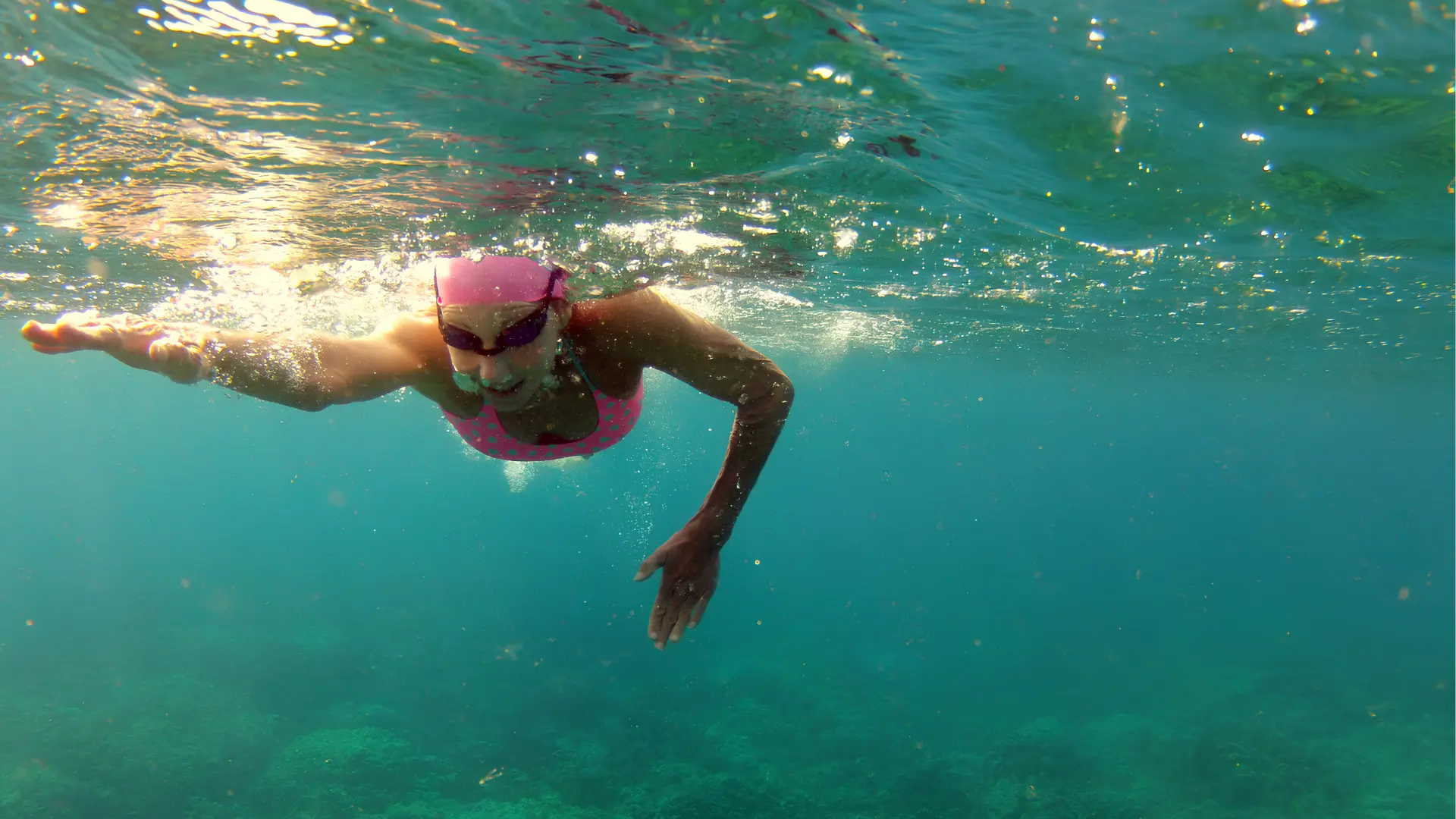
The Science Behind Effortless Freestyle
Most swimmers are taught what to do. Very few are taught why it works.
For 40 years, Dr. Jan Prins has measured the mechanics of efficient freestyle. This course brings those discoveries together for swimmers and coaches.
Created by Dr. Jan Prins, Ph.D.
Director, Aquatic Research Laboratory
University of Hawaiʻi
Meet Dr. Jan Prins
Why do some swimmers move through the water so much more efficiently than others?
That’s the question Dr. Jan Prins has spent more than 40 years trying to answer.
Not through opinion, but by measuring what happens beneath the surface.
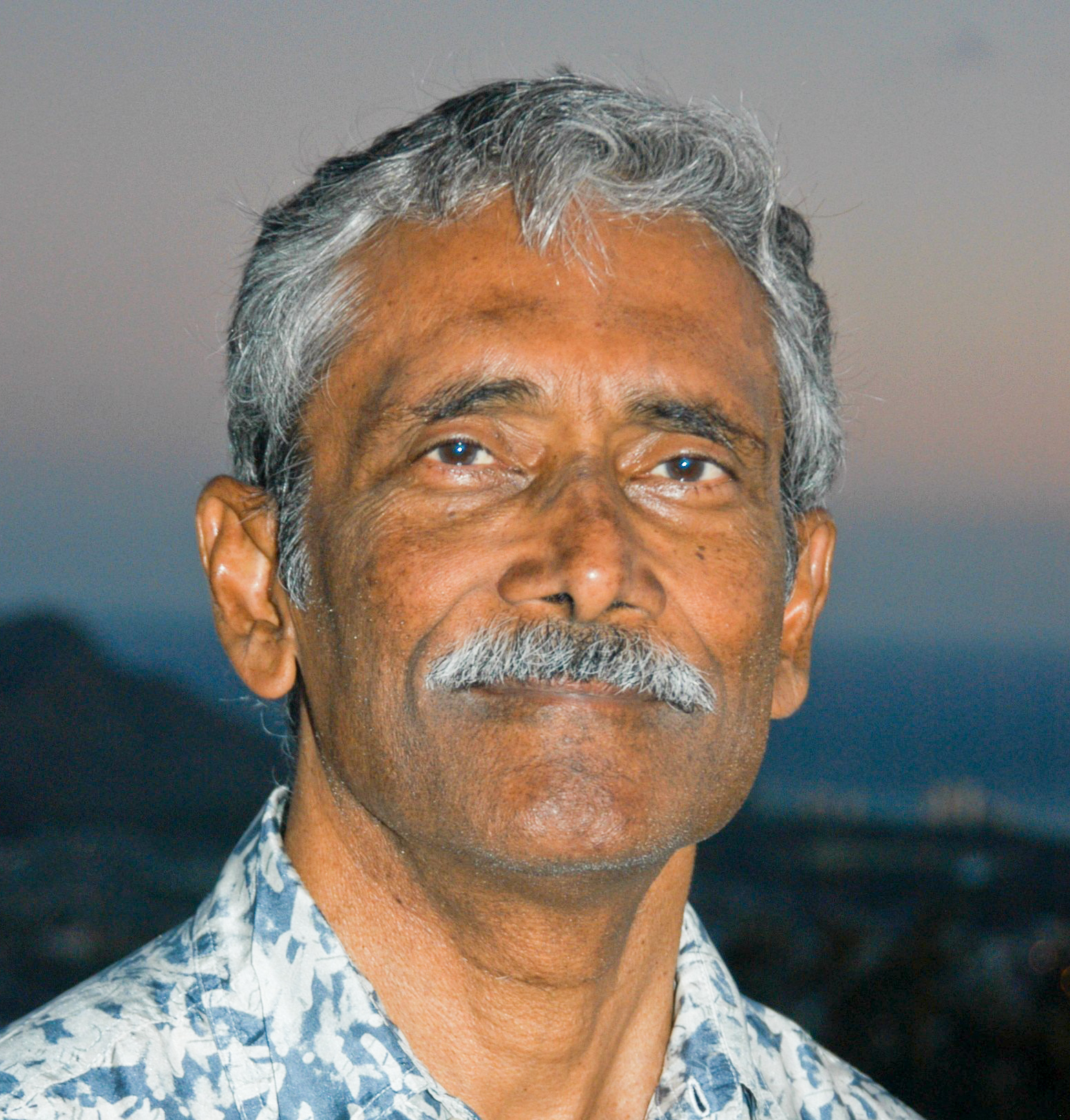
Jan Prins, Ph.D. — Director, Aquatic Research Laboratory, University of Hawaiʻi.
Meet Dr. Jan Prins
A scientist who never left the water
Jan Prins trained under legendary coach Doc Counsilman at Indiana University during a period when swimming was being transformed by biomechanics and fluid mechanics.
He later founded the Aquatic Research Laboratory at the University of Hawaiʻi, pioneering the underwater motion analysis that has since shaped the work of Olympic coaches, Masters swimmers, triathletes, and open water swimmers worldwide.
Now, for the first time, he’s distilled that work into a course for every swimmer and coach.
The science behind the strokes
See what the human eye can’t.
By recording swimmers simultaneously from multiple perspectives, Dr. Prins revealed the hidden mechanics that separate efficient strokes from inefficient ones.
Now, you’ll learn to see your own stroke the same way.
Your Stroke
Every swimmer moves through the water differently.
Your most important opportunity may not be more strength or more training. It may be understanding how your body is interacting with the water.
Take the short Freestyle Biomechanics Assessment to identify the areas of your stroke most likely to improve your efficiency.
Complete in 2–3 minutes.
Inside the course
Every stroke tells a story.
Most swimmers focus on what they can feel. This course teaches you to recognize what the water reveals — how body position, propulsion, timing, and drag shape every stroke.
Once you see those patterns, you’ll never watch a swimmer the same way again.
The Curriculum
Sixteen lessons. Five learning modules. One deeper understanding of freestyle.
The course follows the stroke from body position through breathing, with each lesson building on the last.
The Science Behind the Stroke
Discover the biomechanical principles that shape efficient freestyle and the research that transformed our understanding of swimming.
- Introduction
- Freestyle Biomechanics Research
Building an Efficient Stroke
Learn how body position, alignment, and the flutter kick establish the foundation for efficient movement through the water.
- Body Position & Orientation
- The Freestyle Flutter Kick
The Catch and the Pull
Follow the stroke from hand entry through the catch and underwater pull to understand how efficient swimmers generate propulsion.
- Hand Entry
- Arm & Hand Extension
- Body Roll
- The Catch
- The Underwater Pull
Correcting Common Stroke Defects
Recognize the subtle technical errors that reduce efficiency and learn how to identify and correct them in yourself or the swimmers you coach.
- Elbow Bend
- The Misunderstood S-Pull
- Hands Sliding Sideways
Completing the Stroke
Bring every phase together by understanding the finish, recovery, breathing, and how each stroke prepares for the next.
- —The Push Phase
- —Freestyle Arm Recovery
- —Breathing in Freestyle
- —Conclusion with Additional Tips
Who Benefits
Whether you swim, coach, race, or simply love the water.
Efficient freestyle isn't reserved for elite athletes. Biomechanics applies to every swimmer, at every level.
Fitness Swimmers
Build a smoother, more efficient stroke and swim farther with less effort.
Masters Swimmers
Understand the mechanics behind your technique and make purposeful improvements.
Triathletes & Open Water Swimmers
Develop a stroke that remains efficient over long distances and in changing conditions.
Coaches
Gain a scientific framework for observing swimmers, identifying inefficiencies, and communicating effective corrections.
Lifelong Students of Swimming
If you're fascinated by how great swimmers move through the water, this course will change the way you watch every stroke.
Beyond the course
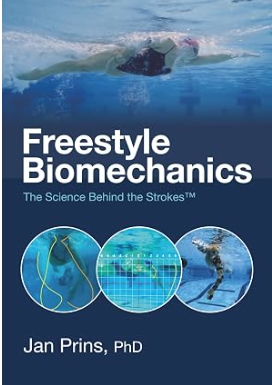
The course is built on decades of research. This is the book that captures it.
These ideas were shaped through more than thirty-five years of teaching stroke mechanics and over twenty years of high-speed motion analysis research.
Dr. Jan Prins later expanded that work into Freestyle Biomechanics: The Science Behind the Strokes, the reference for swimmers and coaches who want to explore the science in greater depth.
“Freestyle Biomechanics is an invaluable resource for swimmers of every background and a treasure trove for coaches searching for the scientific principles behind better technique.”
Michael J. Stott
Swimming World staff writer • Swim coach
View the Book on AmazonRecognized by coaches, scientists, and champions
What leaders in swimming are saying.
What Jan Prins has developed in Freestyle Biomechanics is a step beyond what anyone has done before. It is an excellent teaching tool that I can use in coaching my Masters swimmers and Triathletes.
Jim Montgomery
Olympic Gold Medalist • Former World Record Holder • Swim Coach
Trusted by leaders across the swimming community
Ernie Maglischo, Ph.D.
Author, Swimming Faster
Bob Groseth
Former Head Coach, Northwestern University
Dan Schemmel
Head Men's Swimming Coach, Stanford University
Bruce Kennard
Former NCAA Division I Head Swim Coach
Chuck Riggs
ASCA Hall of Fame
Freestyle Biomechanics FAQ
Questions Every Swimmer Asks
Clear answers about the course, the science behind it, and how it can help you better understand your freestyle stroke.
No. Freestyle Biomechanics is designed for swimmers of different ages, backgrounds, and ability levels—including Masters swimmers, open water swimmers, triathletes, swim coaches, and competitive athletes.
You do not need to swim at an elite level to benefit. The course is built around principles that help any swimmer better understand body position, propulsion, breathing, the catch, the underwater pull, and other essential parts of freestyle technique.
The course is designed to help you understand the movement patterns that influence swimming speed and efficiency.
Rather than offering a single quick fix, Dr. Jan Prins explains how different parts of the freestyle stroke affect propulsion, drag, body alignment, and forward velocity. That knowledge can help you identify inefficient movement and make more informed changes to your stroke.
Yes. Efficient freestyle technique is especially important when swimming longer distances.
Open water swimmers and triathletes can use the course to better understand body position, stroke length, breathing mechanics, propulsion, and the movement patterns that may contribute to unnecessary fatigue.
The biomechanical principles apply in both pool and open water environments.
The course examines the freestyle stroke from body position through the completion of the underwater pull.
Topics include:
- Body position and alignment
- The freestyle kick
- Hand entry and arm extension
- Body rotation
- The catch
- The underwater pull
- Elbow position
- The push phase
- Arm recovery
- Breathing mechanics
- Common freestyle stroke defects
The five-module course contains 16 video lessons and approximately one hour of instruction.
Many swimming courses tell you what your stroke should look like. Freestyle Biomechanics focuses on explaining why particular movements work—and what happens when they do not.
Dr. Jan Prins uses high-speed underwater video and biomechanical analysis to connect visible stroke mechanics with changes in propulsion, drag, alignment, and swimming velocity.
The goal is not simply to copy another swimmer. It is to develop the understanding needed to evaluate and improve your own stroke.
The course is taught by Dr. Jan Prins, PhD, a swimming biomechanics researcher, educator, and coach.
His work has included research using synchronized high-speed underwater videography and motion-analysis technology, as well as coaching competitive, Masters, Paralympic, and international swimmers. His research has examined the stroke mechanics of swimmers ranging from everyday athletes to Olympic champions and world-record holders.
No. You can complete the course without special equipment or underwater filming.
The underwater footage is used within the lessons to make difficult biomechanical concepts easier to see and understand. You can then apply those principles when swimming, working with a coach, or reviewing your own video.
The course includes five modules, 16 lessons, and approximately one hour of video.
You can complete it in one sitting or move through the lessons individually and return to relevant sections as you work on different parts of your stroke.
Yes. The course gives coaches a framework for observing freestyle stroke mechanics and explaining them to swimmers.
The video examples include both effective movement and common stroke defects, helping coaches recognize issues such as poor alignment, dropped elbows, inefficient hand paths, and loss of propulsion during the underwater pull.
The course teaches the principles you can use to understand and evaluate freestyle technique, but purchasing the course does not include an individual video analysis of your stroke.
The free Stroke Profile on this page provides an educational starting point based on your answers. It is not a substitute for an in-person coaching assessment or individualized biomechanical analysis.
After purchasing, you will receive access to the course through Kajabi.
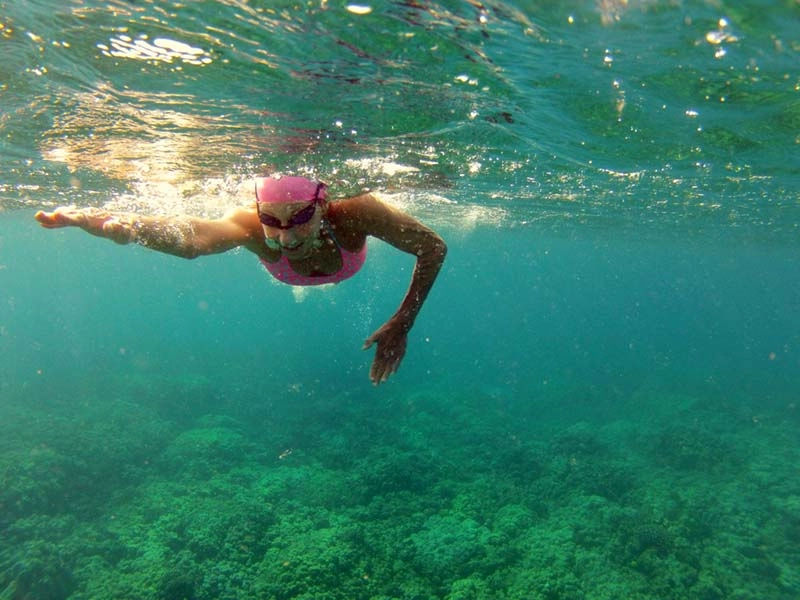
Enroll in Freestyle Biomechanics
Understand freestyle like never before.
Whether your goal is to swim farther, faster, or simply more efficiently, this course will change the way you see every stroke.
Enroll in Freestyle Biomechanics16 Lessons • 5 Learning Modules • Approximately 1 Hour • Learn at Your Own Pace
30-day money-back guarantee.
“Coaches can guide you. Drills can help you. But understanding biomechanics gives you the knowledge to coach yourself for a lifetime.”